
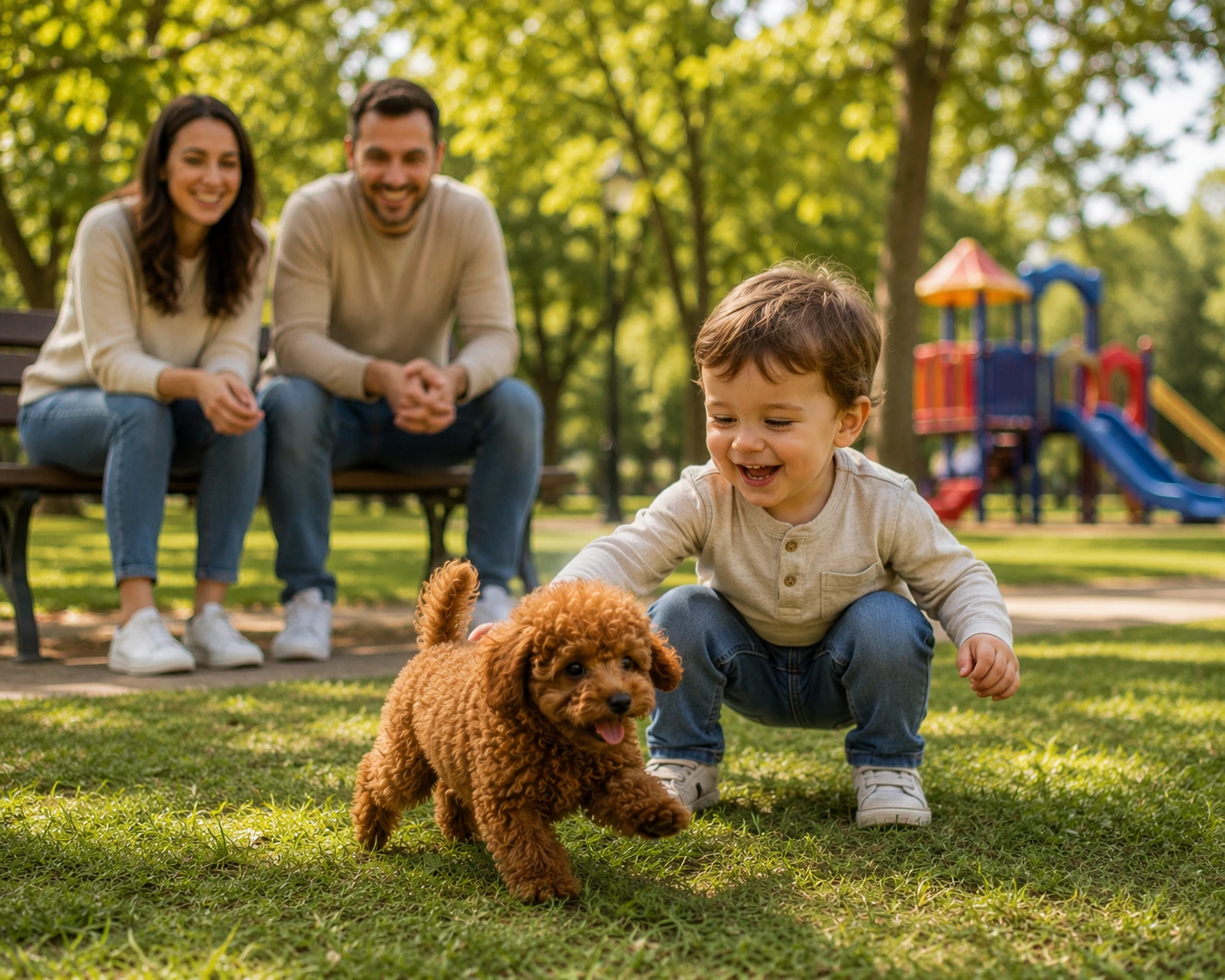
Toy Poodles have become one of the most popular small dog breeds in the world in recent years. In particular, Toy Poodle puppies with a teddy bear face have gained enormous popularity across social media platforms. However, as demand has increased, mixed-breed dogs and non-standard breeding practices are also being marketed as "purebred Toy Poodles."
So, how can you tell if a dog is truly a purebred Toy Poodle? What is a pedigree certificate, and why is it important? What are the official size standards for a Toy Poodle? Are Toy Poodles and Toy Poodles the same breed?
In this comprehensive guide, we will explore Toy Poodle characteristics, breed standards, pedigree systems, and everything you should know before choosing a purebred Toy Poodle puppy.
What Is a Purebred Toy Poodle?
A purebred Toy Poodle is a dog that comes exclusively from Toy Poodle parents and exhibits the physical and behavioral traits defined by official breed standards.
The Toy Poodle is the smallest size variety within the Poodle breed family, often referred to as the "Toy Poodle" or "Toy Caniche" in some regions.
Major kennel clubs and breed organizations evaluate purity based on:
- Height standards
- Weight range
- Coat texture and quality
- Temperament and personality traits
Are Toy Caniche and Toy Poodle the Same Breed?
Yes. Toy Caniche and Toy Poodle refer to the same breed.
In many countries, including Turkey, terms such as:
- Toy Caniche
- Toy Poodle
- Toy Kaniş
- Toy Poodle Dog
are often used interchangeably.
However, the Toy Poodle is sometimes confused with the Miniature Poodle, which is a different size category.
Toy Poodle Characteristics
The popularity of the Toy Poodle can largely be explained by its outstanding qualities and adaptability.
Some of the breed's most notable characteristics include:
- Exceptional intelligence
- Low shedding coat
- Human-oriented personality
- Small and manageable size
- High trainability
- Excellent adaptability to apartment living
Because of these traits, Toy Poodles are especially popular among families with children and first-time dog owners.
What Are the Official Toy Poodle Size Standards?
One of the easiest ways to identify a purebred Toy Poodle is by checking whether it falls within accepted breed size standards.
A fully grown Toy Poodle typically measures:
- 24–28 cm (9.5–11 inches) at the shoulder
- 2–4 kg (4.5–9 lbs) in weight
Dogs significantly larger than these measurements may belong to other Poodle size categories such as:
- Miniature Poodle
- Medium Poodle
- Standard Poodle
Many advertisements use terms such as:
- Teacup Poodle
- Tiny Toy Poodle
- Micro Toy Poodle
However, most major kennel clubs do not officially recognize these as separate breed varieties.
Toy Poodle vs Miniature Poodle
This is one of the most commonly misunderstood topics among prospective owners.
Toy Poodle
- Smaller overall size
- Average weight of 2–4 kg
- Compact body structure
- More delicate appearance
Miniature Poodle
- Longer legs
- Average weight of 5–8 kg
- Larger body frame
- Taller overall appearance
Some breeders may market Miniature Poodle puppies as Toy Poodles while they are still young. For this reason, seeing the parents is extremely important when evaluating a puppy.
Standard Poodle vs Toy Poodle
The Standard Poodle is the largest variety within the Poodle family.
Standard Poodle Characteristics
- Typically weighs 18–30 kg
- Athletic build
- Higher exercise requirements
- Larger frame and stronger muscles
Toy Poodle Characteristics
- Significantly smaller size
- Better suited for apartment living
- Often considered a companion or lap dog
Despite their size differences, both varieties are highly intelligent and trainable.
How to Tell if a Toy Poodle Puppy Is Purebred
Identifying a purebred Toy Poodle puppy can be challenging because many physical traits are not fully developed during puppyhood.
Nevertheless, there are several important indicators to consider.
1. Facial Structure
Purebred Toy Poodle puppies often display:
- A rounded teddy bear appearance
- A relatively short muzzle
- Large and expressive eyes
2. Coat Quality
A genuine Toy Poodle puppy usually has:
- Dense curly fur
- Soft and thick coat texture
- Clearly curly rather than wavy hair
3. Body Structure
Purebred Toy Poodles commonly feature:
- Fine bone structure
- Compact body proportions
- Short and balanced back length
Coat Types and Accepted Colors
Coat color plays a significant role in the popularity of Toy Poodles.
Some of the most sought-after colors include:
- Red Toy Poodle
- White Toy Poodle
- Black Toy Poodle
- Apricot Toy Poodle
- Silver Toy Poodle
Red Toy Poodle
One of the most popular colors in recent years.
Advantages include:
- Rich reddish-brown coat
- Perfect match for the teddy bear look
- Extremely popular on social media
White Toy Poodle
Known for its elegant and classic appearance.
Benefits include:
- Eye-catching photographs
- Clean and sophisticated look
Black Toy Poodle
Black Toy Poodles often have a premium appearance due to their deep, glossy coats.
Some black dogs may gradually develop slight gray tones as they age.
What Is a Pedigree Certificate?
A pedigree certificate is an official document that records a dog's ancestry.
The document generally includes:
- Parent information
- Family lineage
- Kennel club registrations
- Multi-generation bloodline records
A pedigree certificate is an important indicator of breed history, but it should not be considered the sole proof of quality.
How to Obtain a Toy Poodle Pedigree Certificate
Pedigree certificates are typically issued through:
- Registered breeders
- Licensed breeding kennels
- Official kennel clubs and canine organizations
Different countries may have different registration systems.
However, responsible ownership should focus not only on paperwork but also on:
- Health testing
- Ethical breeding practices
- Genetic quality
Can a Toy Poodle Be Purebred Without a Pedigree?
Yes, it can.
Some purebred Toy Poodles may not have official pedigree registration.
However, the risks increase when:
- Parentage cannot be verified
- Health records are unavailable
- Breeding conditions are unknown
Purebred Toy Poodle Temperament
A purebred Toy Poodle is generally known for being:
- People-oriented
- Playful
- Social
- Intelligent
- Eager to learn
- Deeply attached to its owner
The Toy Poodle is widely recognized as one of the smartest dog breeds in the world.
What Should You Consider Before Adopting a Purebred Toy Poodle?
Physical appearance should never be the only factor when evaluating a puppy.
Important considerations include:
- Veterinary examinations
- Current health condition
- Parent information
- Socialization level
- Recent photos and videos
- Living and breeding conditions
Extra caution should be taken when encountering unusually low-priced advertisements, as they may indicate health, breeding, or pedigree concerns.
Final Thoughts
A purebred Toy Poodle is much more than a cute appearance or a trendy social media dog. Understanding breed standards, temperament, pedigree documentation, and responsible breeding practices can help you choose a healthy and well-adjusted companion.
Whether you are looking for a red Toy Poodle, a white Toy Poodle, or simply researching the breed, taking the time to understand these standards will help you make a more informed decision and find the right puppy for your family.